01
Educate on AI potential and limitations
Show the most popular AI automation use cases in 2026, relevant for different functions, building case awareness through concrete real-world examples.
Case study
Two weeks online. Three days in HQ in Lisbon. One goal: prepare managers to lead Joom's AI-first transformation.
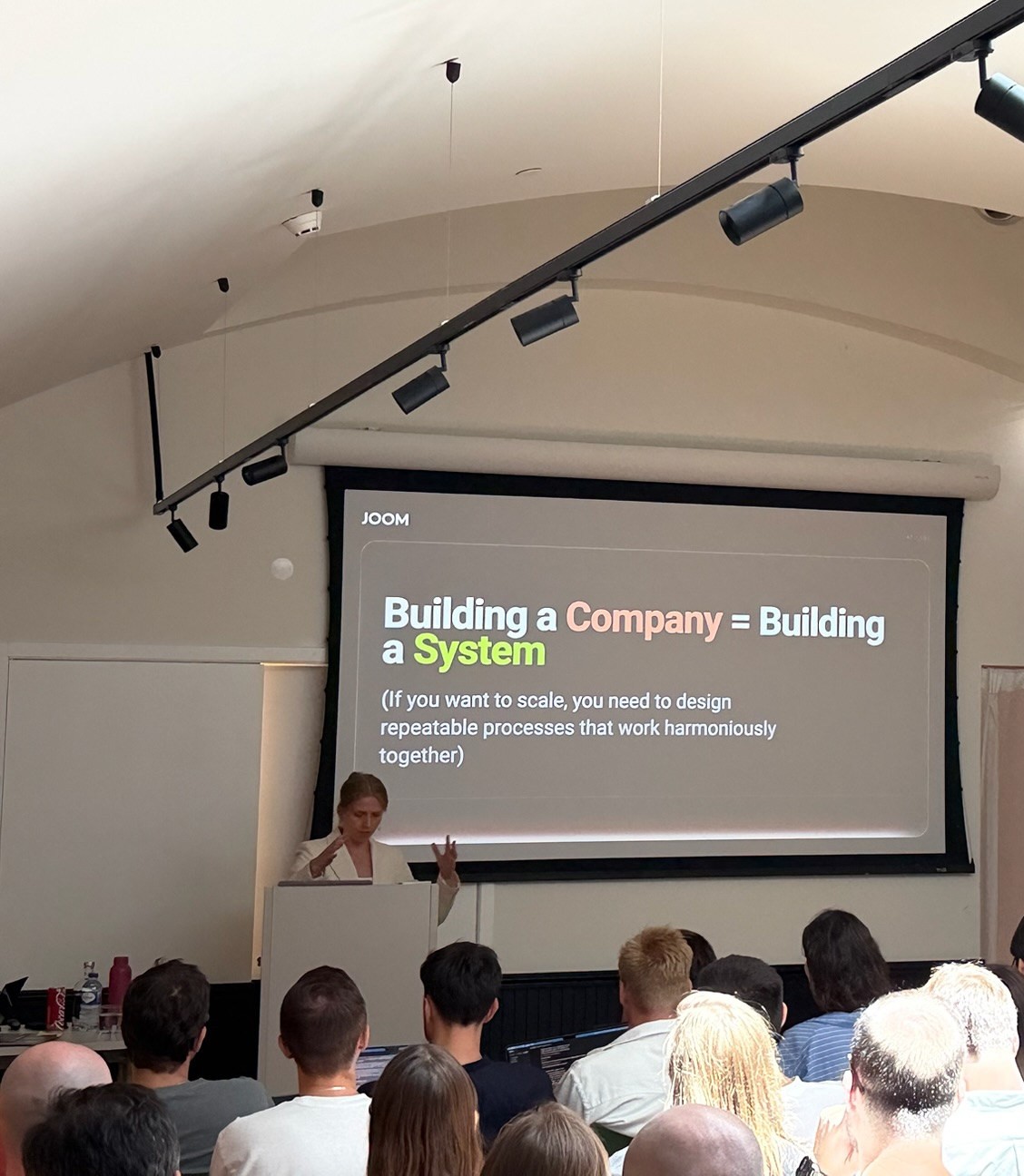
~80 managers from 3 business units trained
8 online sessions + 3 days intensive in Lisbon
Built specifically for Joom
One program for mixed AI maturity
The client
Joom is a global group of eCommerce companies including Joom Marketplace, JoomPro, JoomPulse, JMS and Onfy.

The challenge
What Joom needed every manager to be able to do:
The program
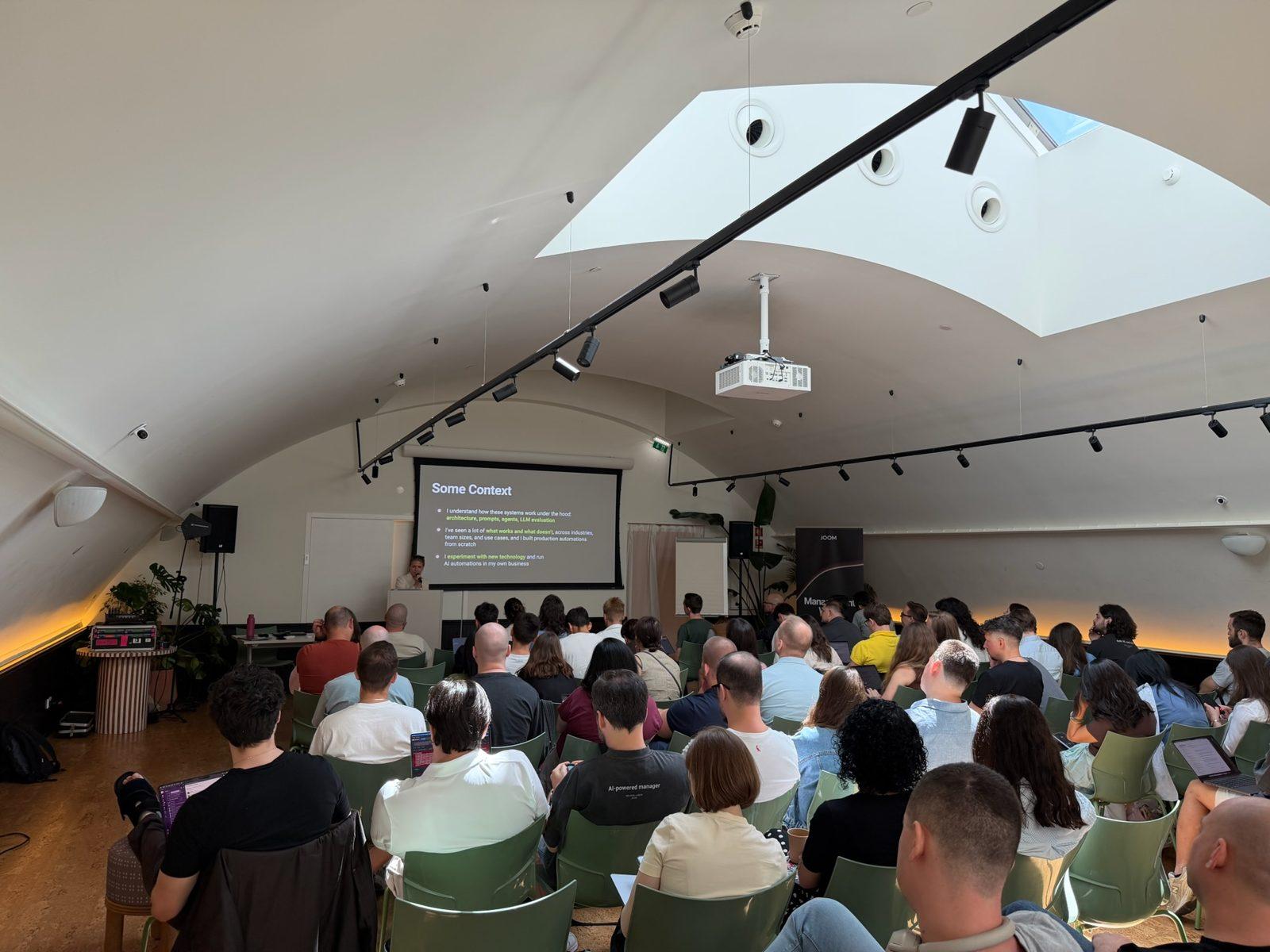
We designed and ran the AI Manager Intensive for Joom's Management Week 2026: a two-week online pre-program open to the whole company, followed by 3 intensive days in Lisbon for around 80 managers from three business units and offices worldwide.
To move managers from experimenting with AI to leading its adoption, every session in the program served four objectives:
01
Show the most popular AI automation use cases in 2026, relevant for different functions, building case awareness through concrete real-world examples.
02
Give every manager a shared language, starting with their own role in the AI adoption, so deep work can happen from shared ground.
03
Each manager should be able to identify the key pain points of their function and spot where AI can bring the most value.
04
Managers should leave the room energised to lead AI adoption in their team, ready to start building that same week.
The process
From kickoff to delivery was about one month, with the program itself designed in roughly two weeks. Rather than adapting an existing workshop, we designed the program together with Joom's leadership, L&D team, and internal AI working group.
“Lena listened closely to our context, our goals as a company, our needs, and designed the training program from scratch around exactly that, in a very short timeframe.”
Program design
The AI Manager Intensive was deliberately split into two phases. The two-week online program built a shared foundation across the company, allowing the in-person intensive to focus entirely on applying AI to managers' real work instead of teaching the basics.
Phase 1
Online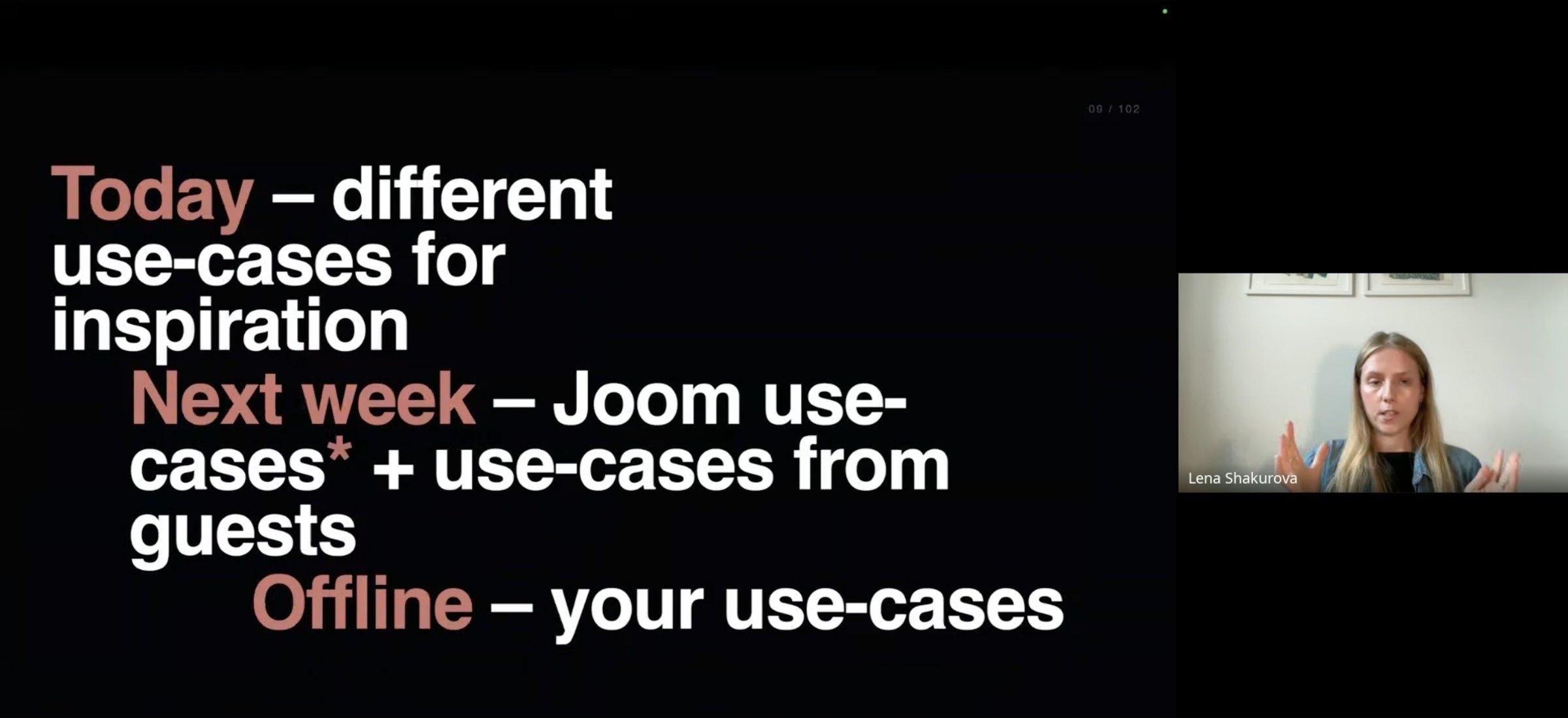
The online agenda
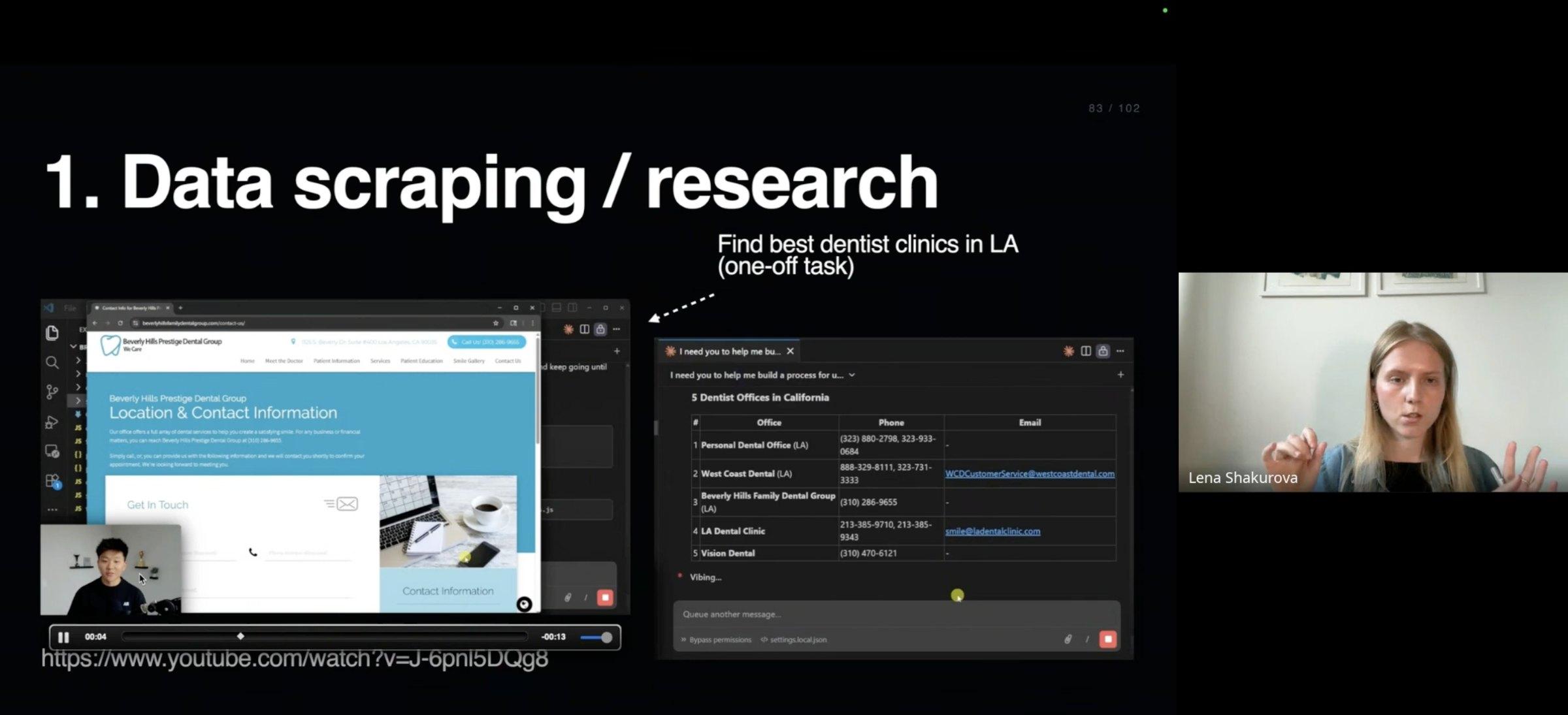
A short introduction to the Management Week program, then an overview of the top AI business use cases in 2026, from generating branded presentations to automating an entire sales process.
Especially relevant for: Everyone joining Management Week, and anyone who wanted to broaden their view of what AI can do and where to look for use cases.
How LLMs actually work, from predicting the next word to performing complex tasks: the building blocks of tools, skills, and context; why models hallucinate, mess up numbers, and lose the thread in large files; and how to use tracing to tell a data problem from a context problem or a tool problem.
Especially relevant for: Managers who use AI daily but can't explain why it sometimes fails, and anyone whose first automation attempt produced unreliable output.
An introduction to Claude: the difference between Claude, Claude Cowork, Claude Code, and Claude Design, the core features from skills to plugins to projects, and the tricks that get the most out of it.
Especially relevant for: Those who hadn't tried Claude yet, and those already using it who didn't yet feel like confident power users.
A guest engineering leader on using AI across every kind of repository, from personal open-source projects with real users to enterprise platforms built by dozens of engineers: generating and auto-fixing thousands of web scrapers, auto-generating pull requests for new integrations, and keeping AI-generated codebases maintainable instead of letting them slide into chaos. Closed with an open discussion on what already works in production versus what still only works in R&D.
Especially relevant for: Engineering managers, senior engineers, tech leads, and developers already using AI tools in production.
The risks of putting AI into production: what can go wrong, the challenges teams actually ran into, and how those were addressed.
Three internal speakers showed what they had already built inside of Joom, with demos and lessons learnt.
Especially relevant for: Managers who wanted to see AI adoption inside Joom rather than in the abstract.
Alongside designing the curriculum, we recruited the external speakers, coached both internal and external presenters, and ran rehearsals so every session delivered a consistent learning experience.
Phase 2
Offline · In person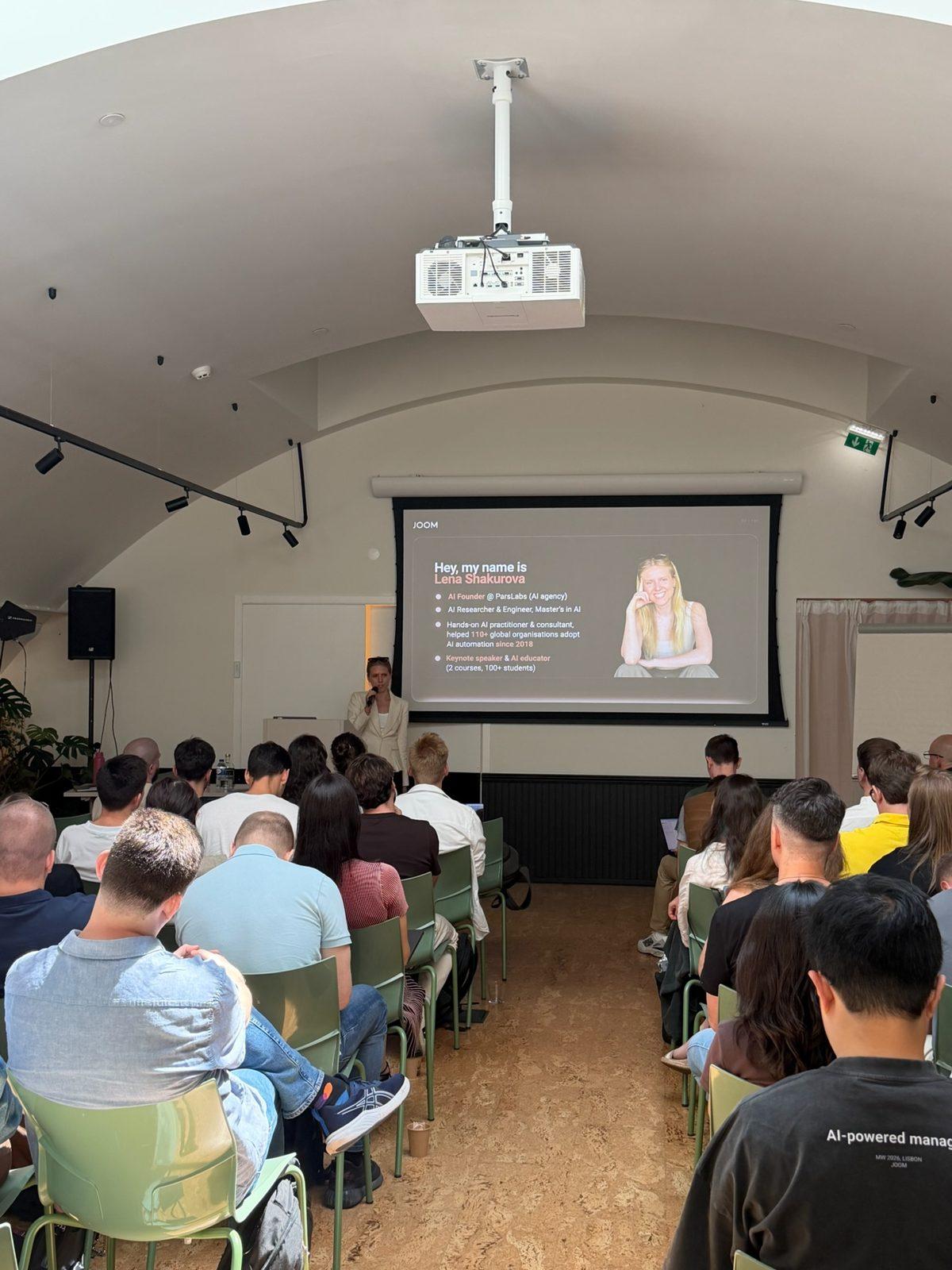

During Joom's Management Week in Lisbon, around 80 managers came together to audit their own processes, identify best opportunities for automation, assess risks and make a plan.
The five modules in Lisbon
Guided Claude exercise · Individual
Managers created a personal AI operating system tailored to their own role, making AI part of their daily work rather than an occasional tool.
Output: Personal Claude OS setup
Individual exercise in Google Sheets & guided prompt
Managers mapped their existing workflows and analysed where AI could improve speed, quality, or efficiency. Using the 6T delegation framework, they identified the highest-value automation opportunities.
Output: Process audit and automation opportunities list
Groups within one department · Facilitated discussions
Managers evaluated potential initiatives based on expected impact, effort, and business value before selecting their highest-priority opportunities.
Output: Prioritised AI initiatives with ROI estimates
Cross-department groups · Guided prompting
Managers assessed the risks of their own automation proposals before implementation and defined risk mitigation strategies.
Output: Risk assessment and mitigation strategies documented
Cross-functional groups
Cross-functional exercises helped teams identify the data they owned and depended on, creating a clearer foundation for future AI initiatives. The goal was to build awareness of how data availability impacts future AI opportunities.
Output: Shared data map
Artefacts
The workshop was designed around creating reusable artefacts rather than completing classroom exercises. Participants left with:
Results
Each manager left with six reusable artefacts that leadership can use for future AI initiatives.
Joom's own pre- and post-program surveys showed improvement across every target competency, while the lowest-confidence responses disappeared after the program.
Two weeks of online learning created a common baseline, allowing managers with different experience levels to work together effectively during the intensive.
Testimonial
Lena Shakurova joined us as our invited expert for Management Week 2026, our annual offline event for around 80 managers across Joom. She helped us build the entire program, from shaping the curriculum to sourcing external speakers for the 2 week online pre-course, and then led the offline workshop in Lisbon herself, over 3 full days.
What we valued most: Lena listened closely to our context, our goals as a company, our needs, and designed the training program from scratch around exactly that, in a very short timeframe. She worked iteratively with us throughout, testing sessions against our feedback and picking more relevant cases as we went.
What really stood out is that Lena is an active practitioner herself, she's plugged into the latest trends and brings real energy to the room.
Together we ran a fairly experimental exercise on systematic context management, something very few people are doing yet, exactly the kind of thing you want from an expert when the technology itself keeps shifting under you.
On top of that, her network and exposure across the AI space were a huge asset, helping us find speakers, source great use cases, and understand how AI adoption actually looks at different levels of maturity.
Our goal for the week was to grow specific managerial skills: identifying the most valuable initiatives to automate, assessing ROI and risk, and improving quality standards for AI-driven work. We saw progress on all of these. We ran a self-assessment before and after the program and saw growth across all three areas.
We highly recommend Lena and would gladly work with her again!

Anna Korshunova
Learning & Development at Joom
Book a training
Tell me about your teams, goals, and timeline. Send an enquiry and I'll respond within 24–48 hours with a proposal for a workshop or a full program.